Cephalometric X-Ray: A Comprehensive Guide to Modern Orthodontic Imaging
Published on October 13, 2024
Key Takeaway
Cephalometric X-rays remain a crucial diagnostic tool in orthodontics, but advancements in 3D imaging technologies like CBCT are revolutionizing the field by providing more accurate and comprehensive craniofacial assessments.
Introduction
Cephalometric X-rays have been a cornerstone of orthodontic diagnosis and treatment planning since their introduction in the 1930s. These specialized radiographs provide valuable insights into craniofacial structures, enabling orthodontists to assess skeletal relationships, dental positions, and soft tissue profiles. However, as technology advances, the field of orthodontic imaging is evolving rapidly, offering new possibilities for more accurate and comprehensive assessments.
The Evolution of Cephalometric X-Rays
Traditional cephalometric X-rays are two-dimensional (2D) images that project a three-dimensional (3D) structure onto a flat surface. While these images have been invaluable for decades, they come with inherent limitations such as superimposition of structures, magnification errors, and the inability to fully capture asymmetries.
Recent advancements have led to the development of 3D imaging technologies, particularly cone-beam computed tomography (CBCT). A study by Kumar et al. (2008) found that measurements from CBCT-synthesized cephalograms were comparable to those from conventional radiographs, suggesting that additional conventional imaging may be avoided when CBCT scans are acquired for orthodontic diagnosis.
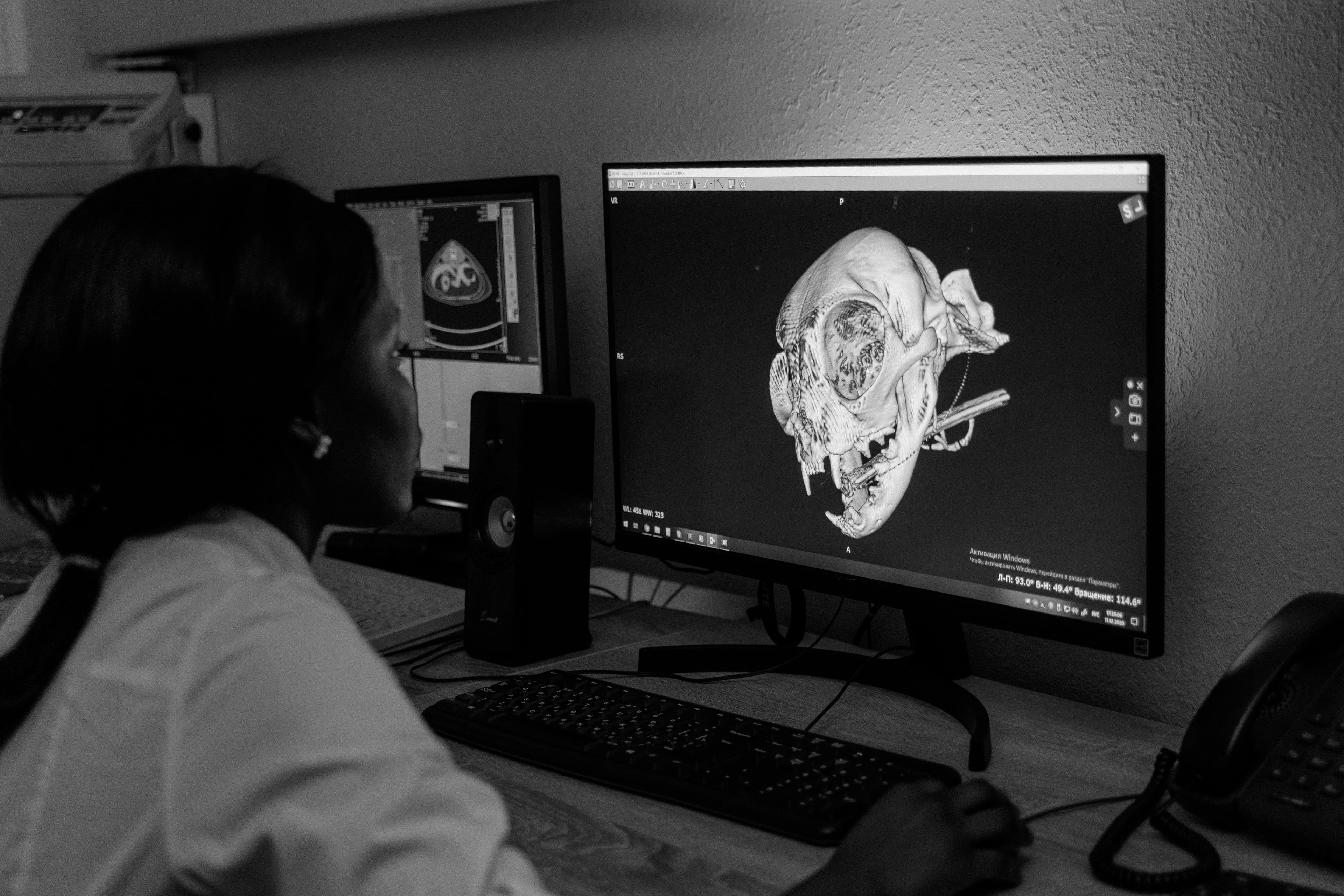
Advantages of 3D Cephalometric Analysis
The transition to 3D imaging in orthodontics offers several significant advantages:
- Improved accuracy: 3D images eliminate the issue of structure superimposition, allowing for more precise measurements.
- Comprehensive view: Clinicians can examine craniofacial structures from multiple angles, providing a more complete understanding of the patient's anatomy.
- Better assessment of asymmetries: 3D imaging excels in detecting and quantifying facial asymmetries, which are challenging to assess with 2D radiographs.
- Enhanced treatment planning: The detailed information from 3D scans enables more precise treatment planning and prediction of outcomes.
Maspero et al. (2019) conducted a study comparing 3D cephalometric analysis on CBCT to 3T-MRI, finding that MRI could potentially offer a radiation-free alternative for 3D cephalometrics in the future.
Challenges and Considerations
Despite the advantages of 3D imaging, there are important factors to consider:
- Radiation exposure: While low-dose CBCT protocols have reduced radiation exposure, it remains higher than traditional 2D cephalometry. Li et al. (2002) emphasize the importance of justifying the use of CBCT based on individual patient needs.
- Learning curve: Transitioning to 3D cephalometric analysis requires additional training and expertise for clinicians.
- Cost: 3D imaging systems are generally more expensive than traditional 2D equipment, which may impact accessibility in some clinical settings.
- Standardization: As noted by Almpani et al. (2023), there is a need for standardized protocols in 3D cephalometric analysis to ensure consistency across clinical and research applications.
The Future of Cephalometric Analysis
As technology continues to advance, we can expect further innovations in orthodontic imaging:
- Artificial Intelligence (AI): AI-powered software is being developed to automate landmark identification and analysis, potentially improving efficiency and reducing human error.
- Integration with other diagnostic tools: Combining 3D cephalometric data with intraoral scans and facial photographs can provide a more comprehensive digital patient record.
- Radiation-free alternatives: Research into MRI-based cephalometry, as explored by Eley et al. (2013), may lead to completely radiation-free 3D imaging options in the future.

Conclusion
Cephalometric X-rays remain an essential tool in orthodontics, but the field is rapidly evolving. The transition from 2D to 3D imaging offers exciting possibilities for more accurate diagnosis and treatment planning. As technology advances, orthodontists must stay informed about the latest developments and carefully consider the benefits and limitations of different imaging modalities for each patient. The future of cephalometric analysis promises even greater precision and personalization in orthodontic care, ultimately leading to improved outcomes for patients.