DEXA Scan Alternatives: Exploring Options for Bone Health Assessment
Published on October 28, 2024
Key Takeaway
While DEXA scans remain the gold standard for bone density measurement, several alternative methods exist that may be suitable in certain situations, offering different benefits in terms of accessibility, cost, and radiation exposure.
Introduction
Dual-energy X-ray absorptiometry (DEXA) scans have long been considered the gold standard for measuring bone mineral density (BMD) and diagnosing osteoporosis. However, as healthcare evolves, there's growing interest in alternative methods that may offer advantages in certain situations. This article explores various DEXA scan alternatives, their benefits, limitations, and potential applications.
Understanding DEXA Scans
Before delving into alternatives, it's important to understand why DEXA scans are so widely used. DEXA imaging serves a sentinel role in the evaluation of osteoporosis, as recommended by various international health organizations for women over 65. Its accuracy and precision in diagnosing osteoporosis and predicting fracture risk are well-established.
Quantitative Computed Tomography (QCT)
QCT is a three-dimensional imaging technique that can measure bone density in specific areas, particularly useful for assessing trabecular bone.
- Advantages: Can evaluate pure trabecular bone, potentially more sensitive to early bone loss
- Limitations: Higher radiation exposure, more expensive than DEXA
QCT scans use a much higher dose of radiation compared to DEXA, but doctors still consider it safe for most patients.
Quantitative Ultrasound (QUS)
QUS uses sound waves to assess bone density, typically in peripheral sites like the heel.
- Advantages: No radiation exposure, portable, less expensive
- Limitations: Less precise than DEXA, limited to peripheral sites
While QUS can't directly measure bone density, it can estimate bone loss and may be useful for initial screening in some populations.
Peripheral DEXA (pDEXA)
pDEXA is a portable version of DEXA that measures bone density in peripheral sites like the wrist or heel.
- Advantages: More accessible, lower radiation dose
- Limitations: Less comprehensive than full-body DEXA
Research suggests that pDEXA may not correlate well with standard DEXA results, indicating it should be used cautiously for diagnosis.

Radiographic Absorptiometry (RA)
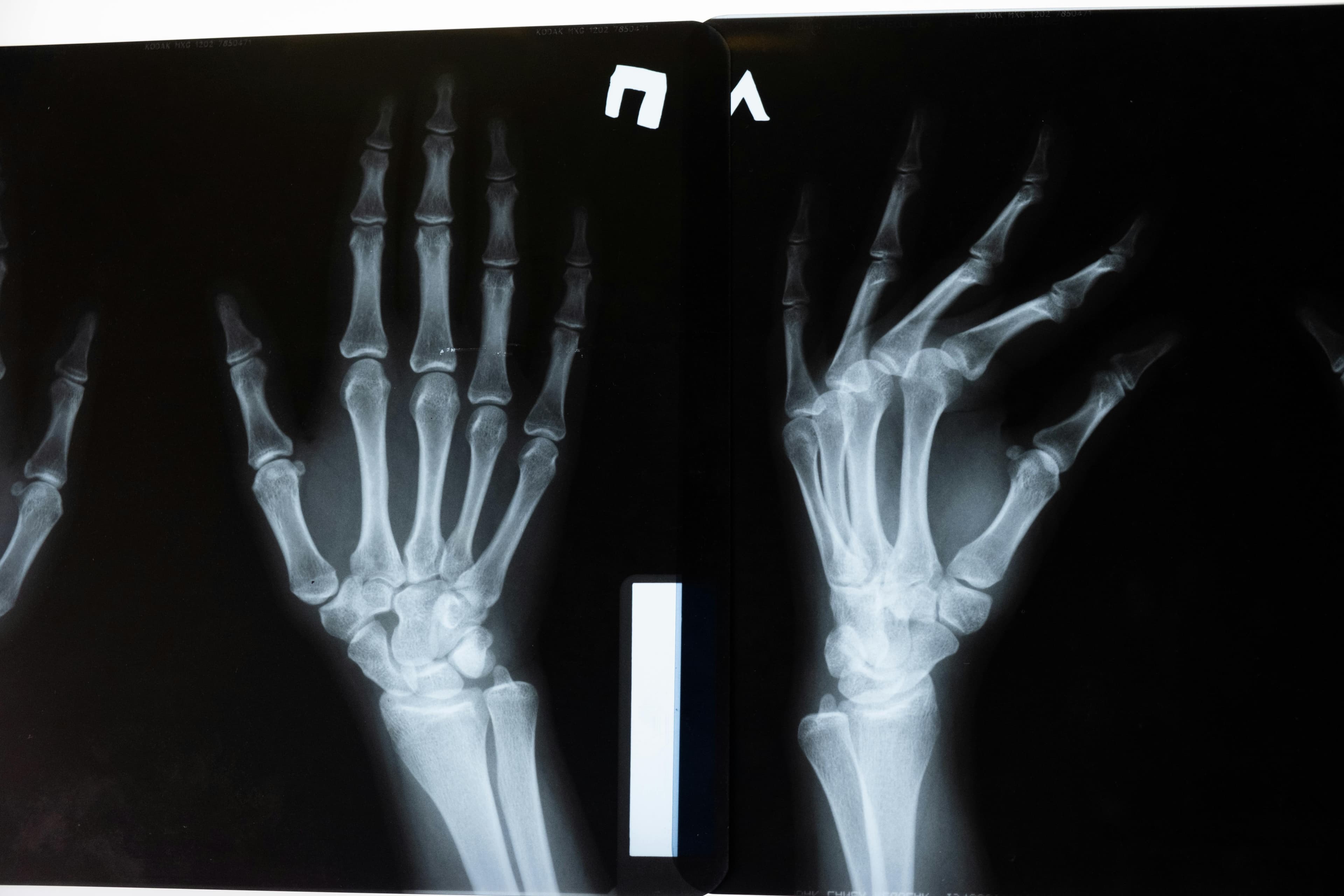
RA uses standard X-ray equipment with a reference wedge to estimate bone density.
- Advantages: Widely available, relatively inexpensive
- Limitations: Less precise than DEXA, limited to peripheral sites
A study found that RA could be cost-effective as a pre-screening tool, potentially reducing the need for DEXA scans by up to 19% in certain populations.
Bioelectrical Impedance Analysis (BIA)
While primarily used for body composition analysis, some BIA devices claim to estimate bone mass.
- Advantages: Non-invasive, no radiation, quick and easy
- Limitations: Not validated for bone density measurement, less accurate than other methods
BIA should not be considered a replacement for DEXA in diagnosing osteoporosis but may have a role in general health assessments.
Conclusion
While DEXA remains the gold standard for bone density measurement, alternative methods offer various advantages in specific situations. QCT provides detailed 3D imaging but with higher radiation exposure. QUS and pDEXA offer radiation-free or low-dose options for initial screening or monitoring, particularly in settings where DEXA is not readily available. However, it's crucial to understand the limitations of each method and consult with healthcare providers to determine the most appropriate bone health assessment tool for individual needs. As technology advances, we may see further improvements in these alternatives, potentially offering more accessible and comprehensive bone health evaluations in the future.