Impacted Front Teeth: Causes, Complications, and Treatment Options
Published on December 20, 2024
Key Takeaway
Impacted front teeth, while less common than impacted molars, can cause significant esthetic and functional issues but can often be successfully treated through a combination of surgical and orthodontic approaches.
Introduction
Impacted teeth are those that fail to erupt into their normal functional position. While wisdom teeth are the most commonly impacted, front teeth (incisors and canines) can also be affected, leading to significant esthetic and functional concerns. This article explores the causes, complications, and treatment options for impacted front teeth.
Prevalence and Types of Impacted Front Teeth
Impacted front teeth are less common than impacted molars, but they can still occur. According to a study by Nagahara et al. (1989), among impacted teeth, maxillary central incisors had the highest frequency at 33.7%, followed by canines at 25.0%. The study also found that impacted lateral incisors were less common, occurring in only 4.4% of cases.
Causes of Front Tooth Impaction
Several factors can contribute to the impaction of front teeth:
- Lack of space in the dental arch
- Presence of supernumerary teeth
- Abnormal position of the tooth bud
- Trauma to the developing tooth
- Genetic factors
A study by Siotou et al. (2022) found that the most common etiological factors for impaction were ectopic eruption pathways, loss of space in the arch, ankylosis of deciduous teeth, and the presence of supernumerary teeth.
Complications of Impacted Front Teeth
Impacted front teeth can lead to various complications:
- Esthetic concerns
- Difficulty in speech and mastication
- Misalignment of adjacent teeth
- Root resorption of neighboring teeth
- Formation of cysts or tumors
Quirynen et al. (2000) noted that impacted front teeth can result in esthetic, functional, and phonetic problems, in addition to root resorption and chronic or acute infections.
Diagnosis of Impacted Front Teeth
Diagnosis typically involves:
- Clinical examination
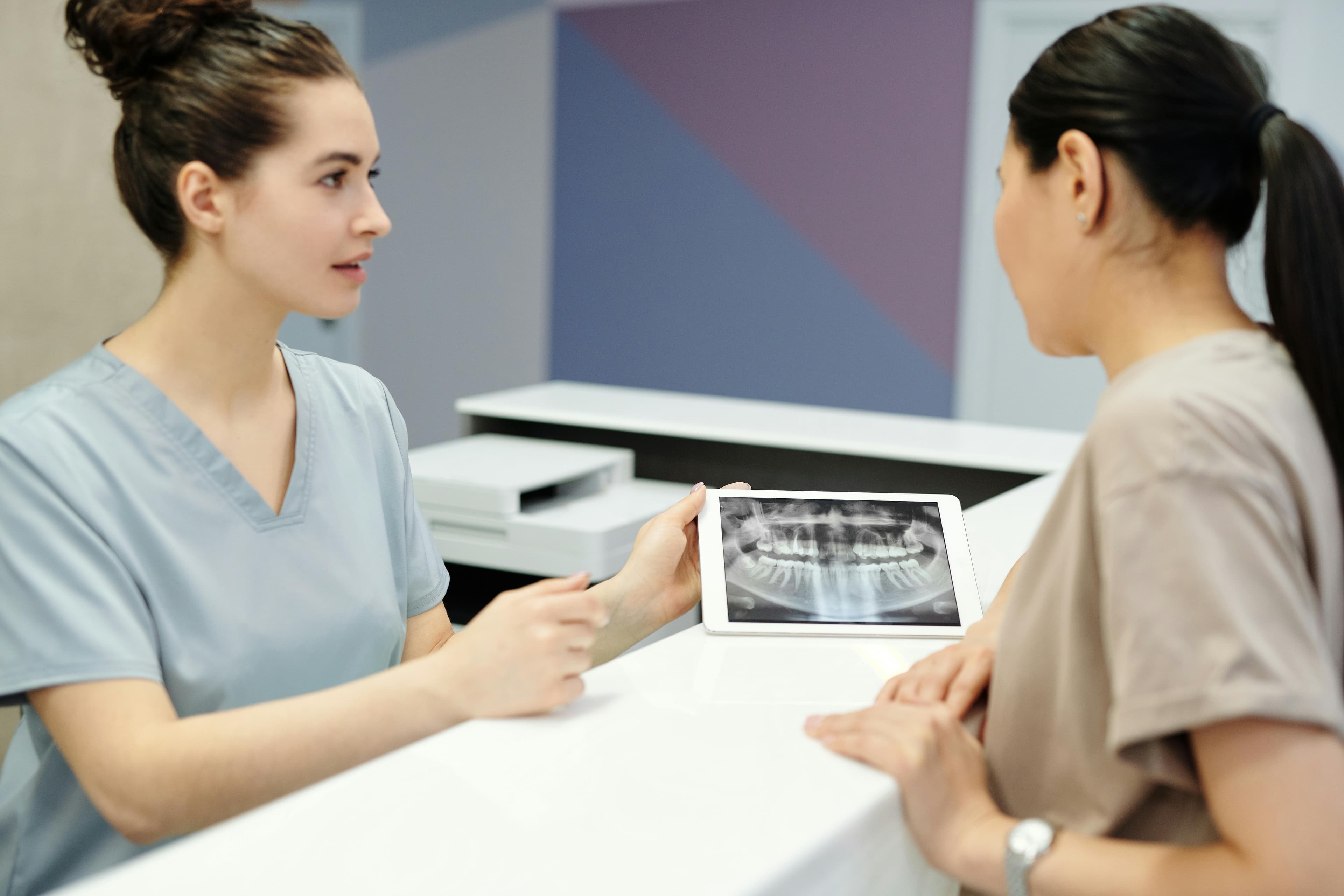
- Radiographic assessment (panoramic X-rays, CBCT scans)
- 3D imaging for precise localization
Early diagnosis is crucial for successful treatment. Tkachenko et al. (2019) emphasized the importance of computed tomography for accurate diagnosis and treatment planning.
Treatment Options for Impacted Front Teeth
Treatment of impacted front teeth often involves a combination of surgical and orthodontic approaches:
- Surgical exposure: The impacted tooth is surgically uncovered.
- Orthodontic traction: An attachment is bonded to the exposed tooth, and orthodontic force is applied to guide it into proper position.
- Space creation: If necessary, orthodontic treatment may be used to create space in the dental arch.
- Monitoring: Regular follow-ups to ensure proper alignment and periodontal health.
Baruah et al. (2021) described a case where mini-implants and a modified Nance button were used to assist in the forced eruption of an impacted canine, demonstrating the effectiveness of combined surgical-orthodontic approaches.
Prognosis and Long-term Outcomes
The prognosis for impacted front teeth is generally good when treated appropriately. Quirynen et al. (2000) found that orthodontic extrusion of impacted front teeth did not jeopardize their periodontal health in the long term. However, careful monitoring is essential to prevent complications such as root resorption or periodontal issues.
Conclusion
Impacted front teeth, while challenging, can be successfully treated with modern orthodontic and surgical techniques. Early diagnosis and intervention are key to achieving optimal functional and esthetic outcomes. If you suspect an impacted front tooth, consult with an orthodontist or oral surgeon for a comprehensive evaluation and personalized treatment plan.