PRISMA Test: A Comprehensive Guide to Evaluating Ocular Alignment
Published on February 17, 2025
Key Takeaway
The PRISMA test is a valuable diagnostic tool for assessing ocular alignment, providing clinicians with crucial information for diagnosing and managing various forms of strabismus.
Introduction
In the realm of ophthalmology and optometry, accurate assessment of ocular alignment is crucial for diagnosing and managing various forms of strabismus. The PRISMA test has emerged as a powerful tool in this field, offering clinicians a precise and reliable method for evaluating eye alignment. This article delves into the intricacies of the PRISMA test, its applications, and its significance in modern eye care.
Understanding the PRISMA Test
The PRISMA test, which stands for Prism and Alternate Cover Test, is a sophisticated diagnostic procedure used to measure the degree of ocular misalignment. It combines the use of prisms with the alternate cover test to provide a quantitative assessment of strabismus. According to Kanukollu and Sood (2023), this test is essential for measuring both tropia (manifest deviation) and phoria (latent deviation).
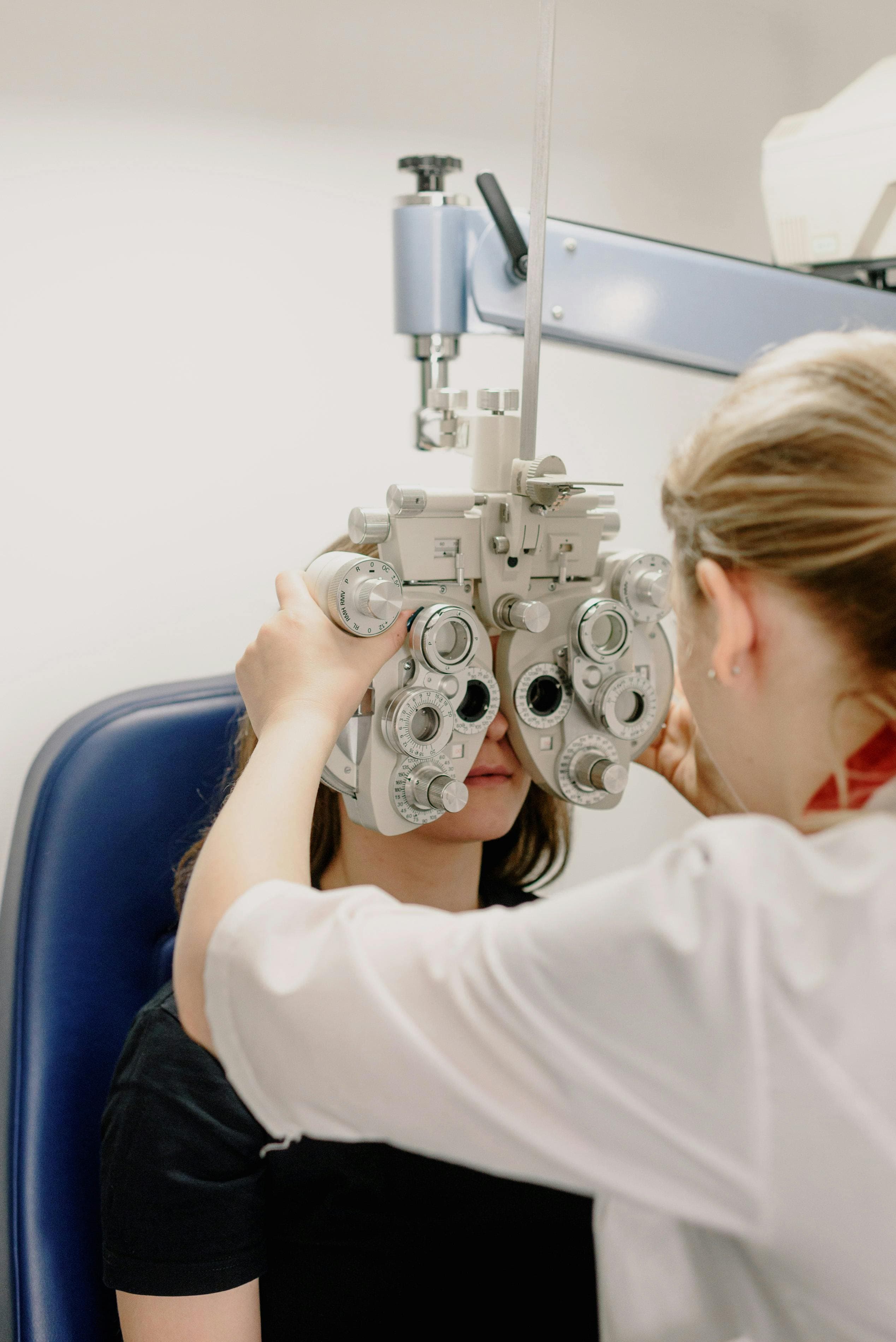
How the PRISMA Test Works
The PRISMA test involves several key steps:
- Initial assessment using the Hirschberg test to estimate the angle of deviation
- Application of prisms of varying strengths to neutralize the deviation
- Alternating cover between the eyes to dissociate binocular vision
- Observation and measurement of refixation movements
Christoff (2024) notes that the mean prism power dispensed in their study was 7^{Δ}, which closely correlated with the simultaneous prism and cover test (SPCT) measurements.
Applications of the PRISMA Test
The PRISMA test has wide-ranging applications in eye care, including:
- Diagnosing various forms of strabismus
- Quantifying the angle of deviation in esotropia and exotropia
- Assessing vertical deviations
- Monitoring the progression of strabismus over time
- Evaluating the effectiveness of strabismus treatments
Advantages of the PRISMA Test
The PRISMA test offers several advantages over other methods of assessing ocular alignment:
- High accuracy and precision in measuring deviations
- Ability to detect both manifest and latent deviations
- Non-invasive and well-tolerated by patients
- Provides quantitative data for treatment planning
Tejedor et al. (2018) found that the prism under cover test (PUCT), a variation of the PRISMA test, showed good repeatability and correlation with stereoacuity in children with alternate fixation horizontal strabismus.

Limitations and Considerations
While the PRISMA test is highly effective, it's important to consider its limitations:
- Requires patient cooperation, which can be challenging in young children
- May be affected by accommodation and fusional mechanisms
- Requires skilled interpretation of results
Marsh et al. (2014) observed that as the degree of induced hypertropia increased, subjects had more difficulty accurately demonstrating torsional status, highlighting the importance of careful interpretation.
Future Directions and Research
Ongoing research is focused on enhancing the PRISMA test and developing new technologies for ocular alignment assessment. Areas of interest include:
- Integration with digital imaging technologies
- Development of automated PRISMA testing systems
- Exploration of PRISMA test applications in telemedicine
Conclusion
The PRISMA test stands as a cornerstone in the evaluation of ocular alignment, offering clinicians a powerful tool for diagnosing and managing strabismus. Its precision, versatility, and non-invasive nature make it an indispensable part of comprehensive eye examinations. As research continues to refine and expand its applications, the PRISMA test will undoubtedly play an increasingly vital role in ensuring optimal eye alignment and visual function for patients worldwide.